

02/01/2026
No Comments
Silver jewellery is admired for its clean sheen, modern elegance, and long-term wearability. Yet one of the most common concerns buyers express is the tendency of silver to darken over time. This colour change often raises questions about purity, quality, and durability.
In reality, silver turning black is a natural chemical reaction— not a defect. Understanding why it happens and how to prevent it ensures your jewellery retains its brilliance for years.
Why Silver Darkens: The Science Behind Tarnish
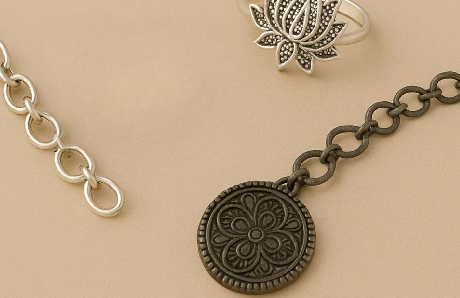
Pure silver does not discolour on its own. However, most jewellery is crafted from 92.5% sterling silver mixed with small quantities of copper for strength. When sterling silver is exposed to oxygen, humidity, sulphur and certain chemicals, it undergoes oxidation. This process produces silver sulphide, which appears as a dark or black layer on the surface—commonly referred to as tarnish. It is a natural outcome of exposure, similar to how iron rusts or copper turns green.Common Causes That Accelerate Tarnishing
While tarnish is normal, certain conditions make silver darken faster:1. Sweat and Skin Acidity
Body chemistry varies by individual. High acidity, perspiration, or hormonal changes can cause quicker oxidisation.2. Contact with Sulphur-Rich Air
Polluted environments, coastal regions, or high-humidity zones carry sulphur particles that trigger tarnish.3. Cosmetic and Chemical Exposure
Perfumes, lotions, deodorants, hair sprays, chlorine, bleach, sanitizers and household cleaners can react with silver and dull its surface.4. Rubber and Leather Storage
These materials release sulphur compounds, causing accelerated blackening when jewellery is stored in contact with them.5. Certain Foods
Onions, eggs, garlic, vinegar, and salty foods contain sulphur and can cause surface darkening if jewellery is handled during preparation.6. Medication and Health Factors
Changes in medication, hormonal shifts, or specific health conditions can increase sweat acidity and influence metal reactions.Does Tarnish Mean the Jewellery Is Not Pure?
No. Tarnish is actually a sign that your jewellery contains real silver.
Imitation metals often chip, peel, rust, or turn brassy or green. Silver tarnish, by contrast, is a surface-level reaction that can be easily polished and reversed.How to Prevent Silver from Turning Black
Proper maintenance slows down oxidisation and keeps jewellery radiant.1. Store Correctly
Use airtight containers, anti-tarnish pouches, or zip-lock bags. Add a silica gel or anti-tarnish strip for extra protection.2. Wear It Frequently
Surprisingly, wearing silver often helps—skin oils provide natural lubrication and reduce oxidisation.3. Keep Away from Chemicals
Apply perfume, lotion, sunscreen and makeup first; allow absorption; then wear jewellery.4. Remove During Activities
Take off silver before swimming, exercising, cooking, or house cleaning to minimise exposure to sweat and chemicals.5. Clean Regularly
Use a soft polishing cloth or mild soap and water. For deeper cleaning, use a silver cleaning solution recommended by jewellers.Simple Home-Care Cleaning Tips
- Polish with a microfibre cloth in circular motion
- Soak in warm water + mild detergent for gentle cleaning
- Use baking soda paste sparingly for stubborn tarnish
- Avoid abrasive scrubbing that may scratch the surface
When to Seek Professional Cleaning
Professional polishing is recommended when:- jewellery has gemstones
- vintage oxidised patterns must be preserved
- tarnish is thick or uneven